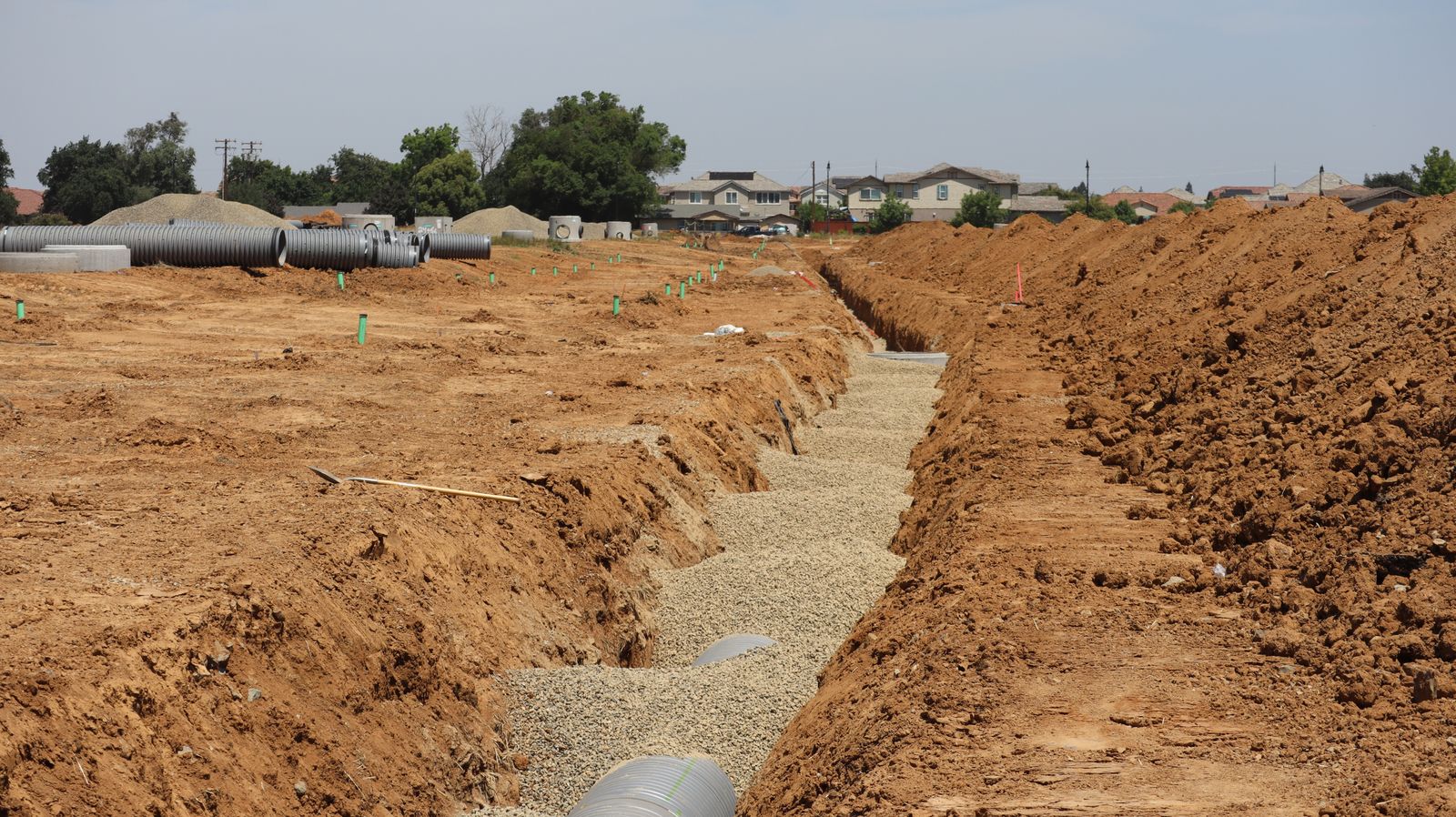
What trenchless means for a sewer lateral
A conventional repair digs a trench along the pipe, lifts out the damaged sections and lays new ones. Trenchless sewer repair in Bell Gardens works from the ends instead. The technician reaches the lateral at an existing cleanout or through a small pit, then either builds a new pipe inside the old one or pulls a new pipe through the path the old one made.
The result is a continuous run of new pipe with far less ground disturbed. On a narrow Bell Gardens lot, where the lateral often runs under a driveway, a walkway or the roots of a mature tree, that difference is the whole point.
It is still real construction. Equipment comes on site, access points are opened, and the house is without its sewer while the work is underway. What changes is how much of the property has to be torn up to get there.
Sewer pipe lining vs pipe bursting sewer line work
There are two main trenchless methods, and they suit different pipes.
Lining, also called cured-in-place pipe, starts with cleaning the old line until the walls are clear. A flexible liner soaked in resin is pulled or inverted into the pipe and pressed against the walls, where it hardens into a new pipe inside the old one. Cracks, small gaps and root entry points at the joints are sealed over.
Pipe bursting uses a cone-shaped head pulled through the old line. It breaks the old pipe outward into the soil and draws new pipe in behind it. Because the old pipe is replaced rather than coated, bursting can sometimes install a pipe of the same size or slightly larger.
| Question | Lining | Pipe bursting |
|---|---|---|
| What happens to the old pipe | Stays in place and becomes the host | Broken apart and pushed into the soil |
| Access needed | Usually one or two points | An entry pit and an exit pit |
| Handles a section that has lost its shape | No | Sometimes, depending on the soil and the damage |
| Pipe size afterwards | Slightly smaller inside | Same or sometimes larger |
| Main thing that rules it out | Collapsed sections and deep sags | Nearby utilities, tight bends, some soils |
Neither method is better in general. One is a better fit for a given pipe, and the camera is how you find out which.
Not sure if your lateral is a candidate? Describe what you know about the line.
Talk it through with a local sewer techWhen no dig sewer repair is a good fit, and when it is not
Trenchless work suits a line that still has a continuous shape from end to end: cracked clay with root entry at the joints, corroded cast iron, or a run of failing joints along an otherwise straight pipe.
It is a poor fit, or needs help from a conventional dig, when:
- A section has collapsed, so there is no open path for a liner or bursting head.
- The line has a belly, a low spot where water sits. A liner follows the old pipe, so it keeps the sag.
- There are tight bends or fittings a liner cannot pass cleanly.
- Another utility line runs very close to the sewer, which can rule out bursting.
Plenty of jobs end up as a mix: a short dig to fix a sag or collapsed spot, then lining for the rest. The honest answer may be "part trenchless", and that is worth hearing before work starts.
Access points: cleanouts and small pits
A trenchless repair needs a way into each end of the section being renewed. An existing outside cleanout is the easiest start. Many older Bell Gardens homes do not have one, and in that case one is often added as part of the job, which also makes later service much simpler.
The other end is usually a small pit near where the lateral meets the city connection, or at the end of the damaged run. The technician will show you where each access point goes and why before any digging begins.
Driveways, mature trees and hardscape on Bell Gardens lots
Many homes here were built from the 1930s onward on narrow lots, and the lateral often runs straight out under a driveway or between a house and a back unit. Ripping out concrete to reach a buried pipe is disruptive, and on a lot with a large tree near the line, digging can damage roots the owner wants to keep.
Those are the cases where homeowners ask about trenchless first, and often for good reason. A lined pipe also has far fewer joints for roots to find, which matters on older lots where tree roots in sewer line joints are a common reason for repeat clogs.
Rental properties add another factor. When several units share one lateral, keeping the dig small can mean less disruption for tenants, and the work may be planned to keep the time without service as short as the job allows.
Homes in the central blocks are covered in more detail on sewer line repair near Veterans Park, and houses near the golf course on sewer line repair near Ford Park.
What the camera has to show before anyone recommends lining
Before any trenchless method is suggested, the line is cleaned and recorded from end to end with a sewer camera inspection. The technician is looking for the things that decide the method: the pipe material, any collapsed or missing sections, sags that hold water, offsets where one section has dropped, the location of bends, and how deep the line runs.
You should see that video. If someone recommends lining without showing you the inside of the pipe, ask to see it first.
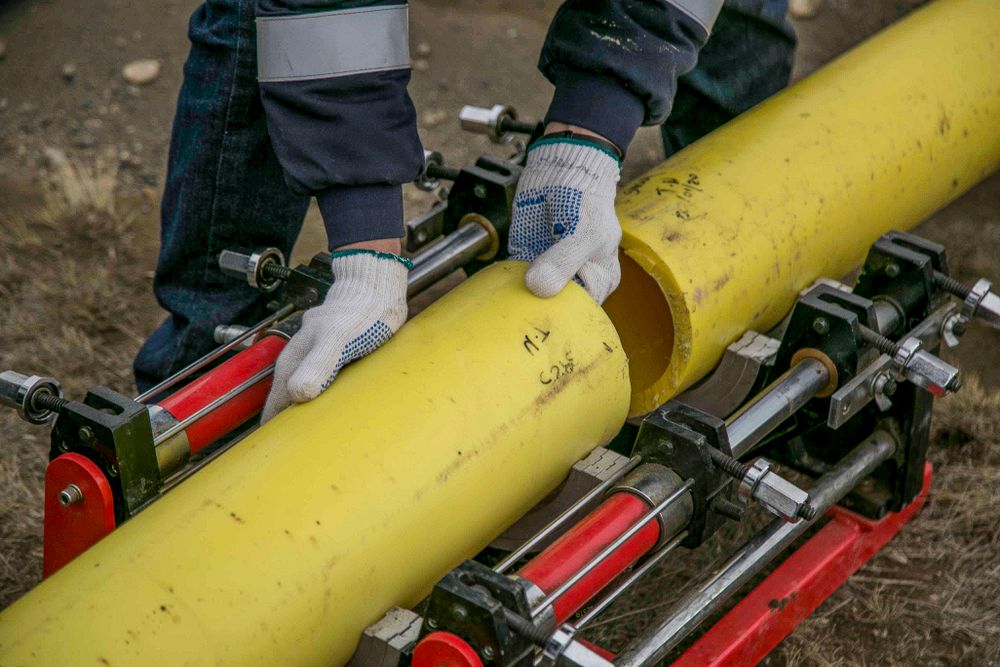
If the line is blocked right now, deal with that first. Our sewer backup page covers what to do while you wait.
Once the camera has shown the line, you hear the options and the price before anything is dug or lined.
Get upfront pricing on the phoneFor the full picture of what can go wrong with a lateral here, see our main page on sewer line repair Bell Gardens homeowners call about most.